
Powering EV Innovation
By 2030, more than 60% of global car sales are expected to be electric, yet the race to perfect the battery housing has only just begun.
In the electrification revolution, it’s not always the battery chemistry driving innovation. Sometimes, the real breakthrough lies in what surrounds it. The most overlooked innovation in modern EV design may well be the battery housing, a structure that defines not only safety and thermal performance but also how efficiently a vehicle can be manufactured and driven.
As electric vehicles surge into the mainstream, engineers and manufacturers are grappling with challenges beyond battery capacity or charging speed. The next wave of progress in EV performance will come from the structures that protect and optimise the battery itself, components built with precision, purpose, and increasingly, intelligent design.
While lithium-ion chemistry often claims the headlines, the reality is that structural and thermal innovation, coupled with high-precision manufacturing, are the foundations of long-term EV success. The demanding balance between lightweight construction, safety regulation, and thermal efficiency requires engineering expertise that bridges concept and production.
That’s where Thompson Precision plays a pivotal role. With decades of experience in CNC machining and advanced prototyping for the automotive and aerospace sectors, we understand that progress in EVs isn’t only about new materials or smart electronics, it’s about mastering precision.
Because in today’s race for efficiency and performance, aluminium CNC prototyping isn’t just a manufacturing process. It’s a strategic enabler, driving smarter design, tighter tolerances, faster iteration, and ultimately, a more sustainable electric future.
The Hidden Challenge: Rethinking EV Battery Enclosures
EV battery housings do far more than encase cells, they form the structural backbone of the pack, managing forces from everyday driving to high-impact crashes. These enclosures must dissipate heat during rapid charging, seal against moisture and dust to IP67 standards or higher, and integrate seamlessly with vehicle chassis for optimal weight distribution.
Yet here’s the paradox: as battery energy density climbs, housings face unprecedented demands. They need to be lighter than ever to extend range, yet rigid enough to prevent cell deformation under vibration or collision. Thermal runaway risks mean every millimetre of design counts, poor airflow channels or weak mounting points can cascade into safety failures.
This complexity explains why many EV projects stall in prototyping. Traditional casting or stamping methods lock in designs too early, exposing flaws only after costly tooling. That’s where rethinking enclosures through aluminium CNC prototyping unlocks agility, allowing engineers to test intricate cooling fins, reinforced ribs, and custom interfaces in real material, days after CAD approval.
As EV architecture evolves toward modular packs and underfloor integration, the housing ceases to be mere protection. It becomes an active performance component, demanding manufacturing partners who grasp these nuances.
With these pressures mounting, one material consistently rises above the rest: aluminium, redefining what’s possible in EV engineering.
Why Aluminium Has Become the EV Engineer’s Material of Choice
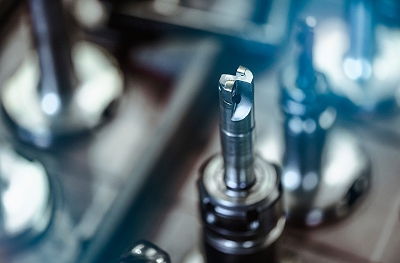
Aluminium stands at the forefront of EV battery housing innovation for good reason. It delivers lightweight strength (typically 30-40% lighter than steel) directly boosting vehicle range without compromising crash performance. Engineers prize its high strength-to-weight ratio, especially in alloys like 6061-T6 or 6082, which handle the structural loads of modern underfloor battery packs.
Beyond mass reduction, aluminium excels in thermal management, a make-or-break factor for battery longevity. Its superior conductivity, around 200 W/m·K compared to steel’s 50, channels heat away from cells during fast charging or high-load driving, minimising thermal runaway risks. Add excellent corrosion resistance in harsh environments, from salted winter roads to coastal humidity, and aluminium proves its endurance.
Sustainability seals the deal. Aluminium is infinitely recyclable with minimal energy loss, aligning perfectly with EV manufacturers’ net-zero pledges. Closed-loop processes now reclaim machining swarf directly into new billets, slashing embodied carbon.
In the shift from internal combustion to electrification, aluminium isn’t just a material substitution, it’s a redesign catalyst, enabling tighter packaging, better aerodynamics, and modular architectures that steel or composites struggle to match.
CNC Prototyping: The Bridge Between Concept and Commercialisation
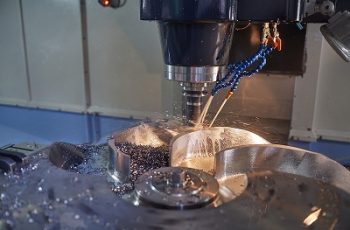
CNC prototyping transforms aluminium’s promise into tangible results, bridging the gap from digital design to validated hardware in days rather than months. Multi-axis machining, particularly 5-axis capabilities, carves complex geometries like integrated cooling channels, structural ribs, and precision mounting bosses directly from solid billet, achieving tolerances down to ±0.005mm.
This speed enables rapid iteration cycles: engineers machine a prototype, subject it to thermal cycling, vibration testing, and crash simulations, then refine the CAD model overnight. Gone are the delays of casting patterns or die trials; instead, data from each build informs the next, compressing development timelines by up to 70% in some EV projects.
Precision matters most where margins are razor-thin. CNC ensures repeatable sealing surfaces for IP67+ ratings and exact fitment with cell modules or cooling plates, flaws invisible in simulation but fatal in assembly. Material properties shine through: aluminium’s machinability allows aggressive feeds without chatter, yielding mirror finishes ready for anodising or testing.
Moreover, CNC supports low-volume scalability. Prototypes evolve seamlessly into pre-production runs, gathering real-world performance data before committing to high-cost extrusion dies or press tools. In an industry racing toward gigafactories, this agility separates innovators from laggards.
Aluminium and CNC form a powerful duo, but true leadership emerges when engineering mindset meets manufacturing intelligence, shaping the battery housings of tomorrow.
The Engineering Mindset Behind Tomorrow’s Battery Housings
The EV industry is shifting from build-to-print manufacturing to design-for-performance engineering, where prototyping partners join the conversation at the concept stage. This collaborative mindset leverages CNC data, cut times, tool wear, surface finishes, to optimise designs before a single prototype ships, creating digital twins that predict real-world behaviour with uncanny accuracy.
Consider multi-material integration: aluminium housings now bond with carbon fibre reinforcements or embedded copper cooling channels, demanding hybrid machining strategies that traditional methods can’t touch. CNC’s flexibility handles these complexities, while feeding finite element analysis (FEA) with empirical data to validate thermal gradients and crash deformation.
Looking ahead, tomorrow’s housings embed smart capabilities, pressure sensors for early leak detection, strain gauges for real-time structural health, even AI-driven thermal mapping. Prototyping these demands not just precision tooling but an engineering culture that iterates electronics alongside mechanics from day one.
Forward-thinkers also embrace sustainability metrics in design: CNC waste streams become feedstock for recycled alloys, while simulation-driven optimisation cuts material use by 15-20%. This holistic approach turns housings from cost centres into value drivers.
Innovation thrives at the intersection of material science, digital simulation, and precision manufacturing, where CNC prototyping isn’t execution, but co-creation.
This mindset finds its perfect expression in facilities built for the EV era, like those at Thompson Precision, where experience meets the demands of cutting-edge automotive innovation.
Bridging Precision and Production: Thompson Precision’s Perspective
At Thompson Precision, we’ve machined thousands of components for Tier 1 automotive suppliers and EV startups, witnessing firsthand how aluminium CNC prototyping accelerates from proof-of-concept to production reality. Our 5-axis CNC centres handle the most demanding geometries, undercuts for cooling passages, thin-wall sections for weight savings, and intricate boss patterns for modular assembly, all while holding tolerances that satisfy the strictest OEM specifications.
What sets us apart is early collaboration. We engage during the RfQ stage, applying Design for Manufacturability (DfM) expertise to refine designs before machining begins. A recent project saw us prototype a next-gen housing with integrated busbar channels in under a week, enabling thermal validation that shaved months off the client’s timeline. That prototype didn’t just test, it informed die design for 50,000-unit production.
Our UK-based facility combines AS9100-certified quality systems with EV-specific testing: helium leak detection, salt spray exposure, and drop testing to mimic real-world abuse. We scale seamlessly too, from one-off R&D parts to bridging runs of 100+ units, gathering data that de-risks full-scale manufacturing.
This isn’t about speed alone; it’s intelligent partnership. We understand EV timelines don’t forgive delays, and our engineers speak the language of performance metrics, not just machinability.
With this foundation in place, the trajectory of EV battery housings points toward unprecedented integration of lightness, intelligence, and sustainability, powered by tomorrow’s manufacturing advances.
The Future of EV Battery Housing: Lighter, Smarter, Sustainable
The next decade will redefine EV battery housings through advanced alloys like aluminium-lithium hybrids, pushing strength-to-weight ratios beyond current limits while slashing embodied carbon by 20-30%. These materials demand CNC prototyping’s precision to validate weldability, fatigue life, and compatibility with solid-state cells.
Modularity takes centre stage as OEMs pivot to swappable packs and upgradeable architectures. CNC’s agility shines here, machining standardised interfaces that adapt to evolving chemistries, from LFP to high-nickel NMC, without retooling. Expect housings that disassemble for second-life applications, extending value chains in a circular economy.
Intelligence embeds deeper: self-monitoring enclosures with fibre-optic sensors for strain and temperature, feeding AI algorithms that predict failures before they occur. Prototyping these hybrids, metal plus electronics, requires partners versed in cleanroom assembly and signal integrity.
Sustainability evolves too. Closed-loop CNC processes now recycle 95% of aluminium swarf on-site, while additive-CNC hybrids print intricate internals before milling exteriors, cutting waste further. Gigafactory-scale production will lean on this precision data to optimise die casting and extrusion.
The horizon blends these threads into zero-waste ecosystems, where battery housings contribute actively to vehicle autonomy and energy efficiency.
Aluminium CNC prototyping doesn’t just build today’s components, it architects tomorrow’s electric mobility.
Leading the Charge Through Precision
In the electric revolution, battery housings emerge as unsung heroes: lightweight sentinels that safeguard performance, enable thermal mastery, and propel sustainability. Aluminium CNC prototyping stands as the linchpin, turning complex demands into agile realities through rapid iteration, micron precision, and seamless scalability from prototype to production.
Thompson Precision embodies this evolution, partnering with EV innovators to bridge engineering vision with manufacturing excellence. From rethinking enclosures and harnessing aluminium’s strengths to embedding tomorrow’s intelligence, precision isn’t a service, it’s the catalyst accelerating the industry forward.
The charge ahead belongs to those who master these details. Ready to prototype the future? Contact Thompson Precision today for a design review or rapid CNC quote, and let’s engineer the next breakthrough together.